Introduction
Every business that takes orders by phone has the same blind spot: what happens when the phone rings at 9 PM on a Tuesday and no one picks up? For retailers, logistics operators, and manufacturers, that missed call is lost revenue.
Traditional voicemail doesn't help. Callers hang up before the beep, and even those who leave a message rarely follow through by morning. Rigid IVR menus fare only slightly better — they can route a call, but they can't handle "I need 40 units of SKU-2281 shipped to our Denver warehouse by Thursday."
According to McKinsey's March 2025 analysis, AI agent deployments in contact centers have driven a 50% reduction in cost per call in documented implementations. For order-taking operations running after hours, that cost curve matters as much as the revenue one.
This guide covers the five strongest AI voice platforms for after-hours order capture in 2025, what to look for when evaluating them, and how to match the right solution to your actual call volume, tech stack, and compliance requirements.
Key Takeaways
- AI voice agents answer calls 24/7, capture structured order data, and sync with your CRM or OMS — no human required
- Sub-second latency is the baseline; anything slower makes conversations feel broken
- Top 2025 picks: Amazon Connect + Lex, Retell AI, Synthflow AI, Bland AI, and PolyAI
- Choose based on integration depth with your existing tools — not just feature count
- SMBs can deploy Amazon Connect + Lex without enterprise budgets — the right AWS partner makes the difference
What Is an AI After-Hours Voice Solution for Order Capture?
Gartner defines conversational AI platforms as SaaS products that primarily enable applications simulating human conversation. In the context of after-hours order capture, that means software using speech recognition, natural language processing, and generative AI to answer inbound calls, conduct real conversations, and complete structured tasks — all without a human on the line.
How It Differs from Voicemail and IVR
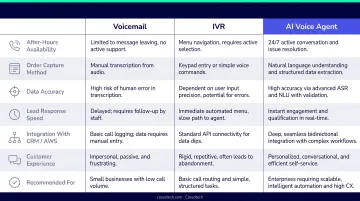
Three options exist for handling calls after hours — and the gap between them is significant:
- Voicemail records audio and stops there. No order data is captured, no CRM is updated, and most callers don't leave a message
- IVR routes calls through rigid menus. It can transfer a caller to a department, but it can't handle "I need to change my order from 20 to 35 units and add expedited shipping"
- AI voice agents handle open-ended conversations, ask clarifying follow-up questions, and extract structured data (item, quantity, address, contact info) — writing it directly into a CRM or order management system (OMS) via API
Forrester noted in 2024 that generative AI and LLMs are driving a vendor revolution in this space — making conversations meaningfully more natural and useful for customers. That shift in capability is exactly why more industries are adopting AI voice for order capture specifically.
Which Industries Benefit Most
- Retail and e-commerce — evening and weekend order spikes
- Food service and distribution — next-day orders placed after close
- Logistics and manufacturing — complex, high-frequency inbound requests from business buyers
- Healthcare supply — time-sensitive medical supply orders with compliance requirements
Best AI Voice Solutions for After-Hours Order Capture
Each platform below was selected for its real-world fit with SMB and mid-market after-hours order capture — not just feature lists. The evaluation covers:
- Voice naturalness and response latency
- Order capture depth and CRM/OMS integration
- Pricing transparency and cost predictability
- Compliance posture (HIPAA, SOC 2, GDPR, PCI DSS)
- Deployment speed and ease of setup
- Track record in after-hours or high-volume scenarios
Amazon Connect + Amazon Lex
Amazon Connect is AWS's cloud contact center platform. Amazon Lex is its conversational AI service. Together, they form a fully managed, enterprise-grade voice solution that integrates natively with the rest of the AWS ecosystem.
The core advantage for businesses already on AWS: order data captured during calls can be written directly to existing backend systems via Lambda — no middleware, no third-party connectors. Cloudtech, as an AWS Advanced Tier Partner with 12 AWS Service Delivery Designations, can deploy and customize this stack for SMBs that want enterprise-level automation without the accompanying cost or complexity.
| Factor | Detail |
|---|---|
| Key Features | Natural language order intake via Lex, call recording and transcription, real-time Lambda integrations for CRM/OMS writes, escalation routing, multi-queue management |
| Pricing | Pay-as-you-go; Connect voice at approximately $0.018/min + telephony; Lex at $0.004/speech request and $0.00075/text request — verify current rates on the AWS pricing page |
| Best For | SMBs and mid-market businesses already on AWS; logistics, manufacturing, and healthcare supply needing a secure, customizable after-hours layer |
Retell AI
For product teams and ops managers who want to move fast, Retell AI is one of the most-cited options for real-time phone agent automation at the SMB and mid-market level. It's built around sub-second latency, transparent per-minute pricing, and flexible telephony integrations.
Pricing is usage-based with no opaque minimums — voice agents run $0.07–$0.31/min, with infrastructure at $0.055/min and model costs variable by LLM choice (GPT, Claude, Gemini all supported). Post-call summaries, sentiment scoring, and call transcripts give operations teams clear visibility into after-hours capture performance.
| Factor | Detail |
|---|---|
| Key Features | Sub-second conversational AI, warm call transfers for urgent orders, post-call summaries, CRM sync (Salesforce, HubSpot), SOC 2 Type I & II, HIPAA with BAA, GDPR |
| Pricing | $0.07–$0.31/min pay-as-you-go; $10 free credits to start; 20 free concurrent calls included |
| Best For | Product teams, call centers, and SMB ops teams wanting fast deployment and predictable cost modeling |
Synthflow AI
No developers required. Synthflow's drag-and-drop workflow builder lets a non-technical ops team configure an after-hours order capture flow from scratch — and order management is listed as a native use case alongside appointment scheduling and lead qualification.
The platform claims <500ms response latency and supports bring-your-own-carrier, meaning you can layer it onto existing phone infrastructure rather than ripping and replacing. HIPAA-compliant plans make it a viable option for healthcare supply and medical device orders.
| Factor | Detail |
|---|---|
| Key Features | No-code flow builder, order management workflows, voice cloning, multilingual support, SMS follow-ups, Twilio/SIP integration, HIPAA compliance option |
| Pricing | Starts at approximately $0.08/min; enterprise contracts from $30,000/year — verify current tiers at Synthflow pricing |
| Best For | SMBs, agencies, and ops-heavy teams in retail, food service, and healthcare needing fast no-code deployment |
Bland AI
Volume is where Bland AI stands apart. The platform supports up to 1 million concurrent calls and handles both inbound and outbound workflows — the clearest fit for logistics and manufacturing companies with complex, high-frequency after-hours order activity.
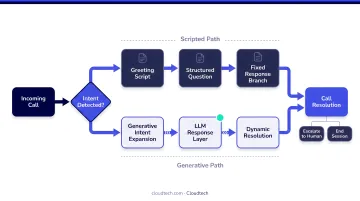
Its Conversational Pathways feature gives precise control over call flow by mixing scripted nodes with generative responses. This hybrid approach reduces errors in order capture scenarios that demand consistency. Pricing is publicly listed and tiered by concurrency need.
| Factor | Detail |
|---|---|
| Key Features | Inbound and outbound call support, multilingual agents, omnichannel (voice + SMS at $0.02/message), Conversational Pathways, up to 1M concurrent calls, SOC 2 Type II, HIPAA with BAA, GDPR, PCI DSS v4.0 |
| Pricing | Start: $0.14/min, no platform fee; Build: $299/month + $0.12/min; Scale: $499/month + $0.11/min — see Bland AI pricing |
| Best For | Enterprises and large logistics, manufacturing, or distribution companies with very high after-hours call volumes |
PolyAI
PolyAI is aimed at global enterprises that need pre-trained domain assistants, multilingual support, and deep integrations with existing contact center and CRM platforms. The order management use case is well-defined: agents can take, edit, or cancel orders by phone, track deliveries, and check inventory status.
PG&E's deployment saved 35,000 labor hours, which signals meaningful containment at scale. Pricing is per-minute and custom — no public rate card exists, and a $150K/year estimate appears in third-party sources but hasn't been confirmed by PolyAI.
| Factor | Detail |
|---|---|
| Key Features | Pre-trained domain assistants (order lookup, routing, reservations), multilingual and multi-accent support, deep CCaaS/CRM integrations, SOC 2 compliance |
| Pricing | Custom per-minute pricing — contact PolyAI sales directly; no public rate card |
| Best For | Large enterprises in retail, hospitality, and financial services with global customer bases and high after-hours inbound volume |
How We Chose These Platforms
The evaluation prioritized fit over feature length. A common mistake buyers make is building a vendor scorecard around feature count rather than alignment to their actual order capture workflow.
The Evaluation Criteria
- Voice naturalness and latency — sub-second response is the practical baseline for phone conversations that don't feel robotic
- Order capture and CRM/OMS integration depth — API and webhook capability matters more than voice quality alone
- Pricing transparency — SMBs need predictable cost modeling; per-minute pricing with public rate cards beats opaque enterprise contracts for early-stage deployments
- SOC 2, HIPAA BAA availability, and data residency controls for regulated industries
- Deployment speed — weeks, not months, for most SMB use cases
Matching Platform to Business
Scale and tech stack should drive the shortlist:
- High AWS investment + security requirements → Amazon Connect + Lex
- Fast deployment + clear cost modeling → Retell AI
- No engineering resources + HIPAA needs → Synthflow AI
- Very high inbound volume + complex flows → Bland AI
- Global enterprise + maximum containment → PolyAI
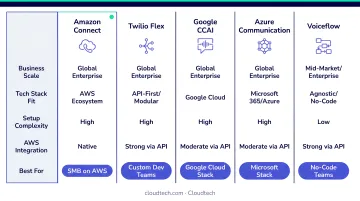
PolyAI's overhead is unnecessary for a growing retailer taking 50 after-hours calls per week. Conversely, Synthflow's no-code builder will hit limits for a distributor fielding 5,000 calls per month with complex SKU-level order logic. That context shapes every recommendation below.
For businesses already running on AWS, Amazon Connect + Lex warrants serious consideration first. The integration depth, security controls, and cost structure align natively with existing AWS infrastructure — and working with an AWS-certified implementation partner can compress deployment timelines significantly compared to a self-service setup.
Conclusion
After-hours order capture is no longer an enterprise-only capability. The platforms covered here make it accessible at nearly any scale and budget, from Retell AI's pay-as-you-go SMB pricing to PolyAI's global enterprise deployments.
When evaluating options, don't optimize for voice quality in isolation. The platforms that deliver real operational value are the ones that connect cleanly to your order management or CRM systems, deploy without months of integration work, and scale as call volume grows.
Those three criteria — clean integrations, fast deployment, and scalability — are exactly what an AWS-native build addresses. For businesses already on AWS or considering a cloud modernization initiative, Cloudtech's AWS-certified architects can design and deploy a custom after-hours voice order capture solution using Amazon Connect and Lex.
The result is enterprise-level automation without the enterprise price tag. AWS Partner Funding may also cover a portion of your project costs on qualifying engagements. Reach out to the Cloudtech team at connect@cloudtech.com to explore what that looks like for your business.
Frequently Asked Questions
What's the best conversational voice AI for after-hours order capture?
The right choice depends on your scale, tech stack, and budget. Amazon Connect + Lex is the strongest choice for AWS-native deployments, Retell AI wins on transparent pricing and fast setup, and Synthflow is the most accessible option for SMBs without engineering resources.
What is an AI after-hours answering service?
It's a voice AI system that handles inbound calls when staff are unavailable, conducting natural conversations, capturing structured data like order details or contact info, and routing urgent requests to a human if needed. Unlike voicemail, it actively interacts with callers and produces actionable output.
How does an AI voice agent capture orders after hours?
The agent uses speech recognition to interpret the caller's request, then asks follow-up questions to collect order details — item, quantity, delivery address, and contact info. It writes structured data to a connected CRM or OMS via API, and some platforms also send a real-time SMS confirmation.
Can AI voice agents integrate with my existing order management or CRM system?
Yes. Most platforms support Salesforce and HubSpot natively and connect to custom OMS platforms via APIs or webhooks. AWS-native solutions like Amazon Connect + Lex offer the deepest backend integration, particularly for teams already using Lambda and DynamoDB.
How much does an AI after-hours voice solution cost?
Costs range widely: Retell AI starts at $0.07/min, Bland AI at $0.14/min, and Synthflow at approximately $0.08/min. Monthly subscription tiers also exist. PolyAI uses custom enterprise contracts. AWS-based deployments scale cost-efficiently with actual usage, with no minimums or long-term contracts required.
Is an AI after-hours voice solution secure and compliant for handling sensitive order data?
Leading platforms — including Retell AI, Synthflow, Bland AI, and Amazon Connect — offer SOC 2 and HIPAA compliance with Business Associate Agreements available. Businesses in regulated industries should verify data residency options, call recording retention policies, and BAA availability before deployment.