The market pressure is real. Gartner projects worldwide public-cloud end-user spending will hit $723.4 billion in 2025, up from $595.7 billion in 2024. That growth reflects bigger workloads moving to the cloud, not necessarily bigger migration budgets.
Here's the thing: migration costs swing wildly based on workload complexity, architecture decisions, data volume, and how prepared your organization actually is. There's no single price tag.
This guide breaks down baseline pricing tiers, the factors that drive costs up or down, the hidden expenses most teams miss, and a practical framework for building your own budget.
Key Takeaways
- Typical ranges: small $20,000–$100,000, mid-market $100,000–$500,000, enterprise $500,000+
- Labor, data transfer, and parallel runs usually cost more than the cloud infrastructure
- Simple, stable apps fit lift-and-shift; legacy or scaling-constrained apps justify refactoring
- Let compliance and app criticality drive replatform-vs-refactor choices—not budget alone
How Much Does Cloud Migration Cost? (Pricing Overview)
Cloud migration doesn't follow a fixed price list. Your final bill depends on estate size, the migration strategy you pick, and whether you handle the work internally or hand it off to a consulting partner.
Three mistakes blow up migration budgets more than anything else:
- Interim environments and scarce talent: running legacy and cloud side by side gets expensive fast
- Wrong compute and storage configs: bill shock hits as soon as workloads go live
- Post-cutover gaps: licensing true-ups, compliance validation, and maintenance often appear only after go-live
Flexera's 2025 State of the Cloud survey found that cloud decision-makers exceeded their cloud budgets by 17% on average, with spend expected to climb another 28% in the coming year. Migration projects follow the same pattern more often than teams expect.
Typical Cost Range
| Migration Scale | Server Count | Typical Cost Range |
|---|---|---|
| Small workload | Under 100 servers | $20,000 – $100,000 |
| Mid-market | 100–500 servers | $100,000 – $500,000 |
| Enterprise | 500+ servers | $500,000 – several million |
These ranges generally cover assessment, migration execution, and foundational landing zone setup. They typically exclude ongoing AWS consumption charges, third-party software licensing true-ups, and long-term managed services. Those show up as separate, recurring line items.
Small Workload Migration ($20,000 – $100,000)
What's typically included:
- Discovery and assessment ($5,000–$25,000 depending on complexity)
- Data migration ($1,000–$5,000 based on volume and tooling)
- Rehosting of core servers with minimal architecture changes
- Basic landing zone and security baseline
Best for: Startups, single-application businesses, and SMBs with fewer than 100 servers and no heavy compliance overhead.
Mid-Market Migration ($100,000 – $500,000)
What's typically included:
- Multi-wave migration planning across several applications
- Mix of rehost and replatform work, including Amazon RDS where it fits
- Moderate application refactoring ($20,000–$100,000 per application)
- Dedicated project management and cutover planning
Best for: Growing companies with 100–500 servers, multiple business units, or emerging compliance needs like HIPAA or SOC 2.
Enterprise Migration ($500,000+)
What's typically included:
- Multi-wave migrations spanning hundreds or thousands of servers
- Significant refactoring and modernization work
- Advanced governance, multi-account landing zones, and extended parallel-run periods
Best for: Large, complex estates with multiple data centers, global operations, or heavily regulated environments where downtime tolerance is near zero.
Key Factors That Affect the Cost of Cloud Migration
Your final migration bill tracks three things: how you move workloads, how much data and infrastructure you touch, and how ready your team and landing zone are before cutover.
Type of Migration Strategy (The 7 R's)
AWS's migration framework defines seven distinct strategies, each with a very different cost profile:
- Rehost: lift-and-shift with minimal changes; usually the fastest and lowest upfront cost
- Relocate: move whole platforms (such as VMware fleets) to a cloud equivalent
- Replatform: add light optimizations in transit without a full rebuild
- Repurchase: replace the app with SaaS or a commercial product
- Refactor: redesign core architecture for cloud-native services; highest engineering cost
- Retain: keep the app on-prem for now and defer migration spend
- Retire: decommission unused systems and remove their run cost

AWS itself calls refactoring the most complex and costly of the seven, since core components get redesigned mid-migration. Rehosting stays cheaper upfront but sacrifices long-term operational efficiency.
Size, Capacity, and Data Scale
Server count, database complexity, storage volume, and network egress all drive labor hours and tooling costs. Tools like AWS DataSync charge by the gigabyte transferred, and larger datasets mean longer transfer windows, which stretch timelines and labor spend.
Bandwidth matters as much as volume. A slow link delays cutover and stretches the parallel-run window—and each extra month often adds 15–25% to total project cost.
Infrastructure Configuration and Target Architecture
Provisioning standard EC2 instances is straightforward and relatively cheap to plan for. Serverless and containerized microservice architectures cost more upfront in design and engineering time, but they often reduce long-term operational overhead.
Managed services (Amazon RDS, AWS Fargate) carry a service premium but cut the administrative burden self-managed virtual machines require.
Level of Customization and Application Modernization
Rewriting legacy code, decoupling monoliths, and building custom API integrations are where engineering hours pile up. Applications with deep legacy dependencies or custom-built architecture push refactoring costs toward the $100,000+ end of the range — sometimes well beyond it for truly complex systems.
Setup, Tooling, and Landing Zone Requirements
Enterprise landing zones, IAM security configurations, and CI/CD pipeline automation require real investment before a single workload moves. AWS Control Tower itself carries no additional service charge, but the services it provisions — logging, monitoring, auditing — generate usage-based costs from day one.
Pre-packaged accelerators cut that setup tax for smaller teams. Cloudtech, for example, builds AWS Control Tower landing zones on standardized frameworks so SMBs can skip months of custom configuration and the engineering cost that comes with it.
Operating, Governance, and Run-Rate Costs
Migration does not end at cutover. Monitoring, compliance audits, and FinOps governance stay in the total cost of ownership. Auto-scaling, storage tiering, and commitment discounts (Reserved Instances, Savings Plans) can lower run-rate spend, but only when someone owns them day to day.
Cost Breakdown of Cloud Migration
Total migration spend splits into two buckets: one-time transitional costs tied to the project itself, and permanent operational costs that continue indefinitely.
| Cost Category | Timing | What It Covers |
|---|---|---|
| Discovery, Assessment & Architecture Planning | One-time | Workload inventory, dependency mapping, TCO modeling |
| Foundation Setup & Data Transfer Execution | One-time | Landing zone build, IAM configuration, data migration, cutover |
| Steady-State Cloud Infrastructure & Hosting | Recurring | EC2, RDS, S3, and other monthly AWS consumption charges |
| Maintenance, Security & Managed Operations | Recurring | Patching, monitoring, security governance, ongoing support |
| Continuous Modernization & Periodic Optimization | Periodic | Right-sizing, reservation renewals, targeted refactoring sprints |

The first two rows are project costs — they end once migration wraps. The remaining three are permanent additions to your IT budget, and they're the ones most organizations underestimate when building the initial business case.
Low-Cost vs High-Cost Cloud Migration Approaches — What's the Difference?
Budget-driven lift-and-shift (rehost) and higher-investment cloud-native rebuilds (refactor) move the same workloads to the cloud—with very different cost and risk trade-offs.
| Dimension | Rehost (Lower-Cost) | Refactor (Higher-Cost) |
|---|---|---|
| Performance & Scalability | Matches existing on-prem performance; limited elasticity | Built for auto-scaling and cloud-native elasticity |
| Resilience & Disaster Recovery | Basic backup and manual failover | Automated multi-AZ failover, lower RTO/RPO |
| Architectural Quality | Carries over existing technical debt | Decoupled, modern microservices architecture |
| Maintenance Overhead | Lower upfront effort, more ongoing patching | Higher upfront investment, lighter ongoing lift |
| Long-Term TCO | Cheaper now, costs creep as scale increases | Pricier now, stronger 3–5 year value |

The right path depends on workload criticality, compliance needs, and how fast you need out of the data center.
- Startup validating product-market fit: Rehost is usually enough; full multi-AZ refactor can wait.
- Healthcare or regulated workloads: Skipping resilience and architecture work often costs more later in risk and rework.
- Many SMBs run both in sequence: Rehost first to exit the data center, then replatform or refactor high-value workloads once usage patterns justify the spend.
How to Estimate the Right Budget for Cloud Migration
Generic pricing calculators give you a starting point. A defensible budget has to reflect your actual workloads, not industry averages.
Factors worth building into your model:
- Business objectives and application criticality: a customer-facing production app warrants a different budget than an internal reporting tool
- Double-run duration: how long will legacy and cloud environments overlap, and what does that parallel infrastructure cost?
- Compliance requirements: HIPAA, SOC 2, and similar frameworks add validation steps and sometimes architectural constraints
- Internal capacity vs. external support: weigh in-house bandwidth against certified AWS consulting help, and check whether you qualify for AWS Partner Funding to offset costs
- Long-term FinOps strategy: plan for post-cutover rightsizing and commitment discounts (Savings Plans, Reserved Instances) from day one, not as an afterthought
AWS Migration Acceleration Program credits and partner-driven investments can offset labor, training, and parallel-environment costs for qualifying projects. Cloudtech pursues MAP funding on every eligible engagement, which can lower what an SMB pays out of pocket for discovery and migration work.
What Most People Miss When it Comes to Cloud Migration Costs
Even well-planned migrations run into the same handful of blind spots:
- Fixating on cloud infrastructure pricing while ignoring labor. Professional services, not compute hours, often make up the largest share of a migration budget.
- Underestimating double-run periods. A planned three-month migration that slips to six months can roughly double your interim infrastructure spend.
- Over-provisioning based on legacy capacity. Teams size cloud instances to match old on-prem specs instead of actual utilization, leaving significant money on the table. Downsizing an oversized instance can cut compute costs by more than 70%.
- Overlooking post-migration governance. Security monitoring, compliance audits, and ongoing FinOps work are recurring costs that rarely make it into the original business case.
Conclusion
Cloud migration costs vary widely. Scope, strategy, and how ambitious the target architecture is drive most of that range.
Separating one-time project expenses from ongoing run-rate costs, and building in real discovery work before you commit to a number, is what separates an accurate budget from a painful surprise six months in. The right investment balances migration speed, business continuity, and the long-term value you want from the cloud.
Frequently Asked Questions
How much does a cloud migration cost?
Small workloads typically run $20,000–$100,000, mid-market migrations land between $100,000–$500,000, and complex enterprise moves can exceed $500,000. Labor and workload complexity drive most of the variation.
How long does a cloud migration take?
Small projects can wrap in a few weeks, while most SMB migrations take 3–6 months. Large-scale enterprise migrations with multiple waves typically run 6–18 months.
What are the 7 R's of cloud migration?
The 7 R's are Rehost, Relocate, Replatform, Repurchase, Refactor, Retain, and Retire. Each represents a different level of change, and a different cost profile, for moving an application to the cloud.
What is the best tool for estimating cloud costs?
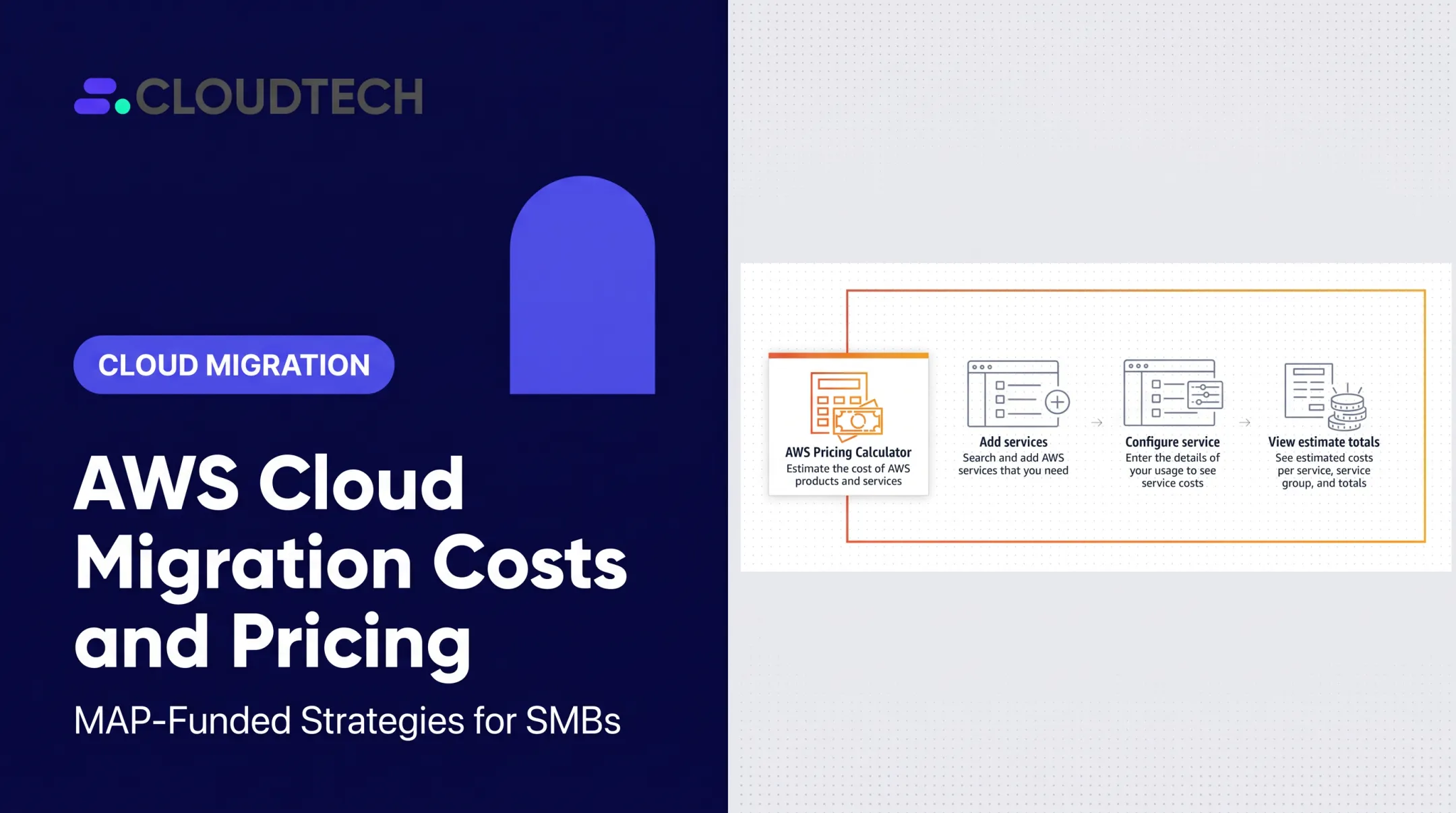
The AWS Pricing Calculator is a solid starting point for modeling infrastructure costs, while AWS Cost Explorer and AWS Budgets track actual usage against estimates. Third-party FinOps and discovery platforms can add deeper inventory-level detail.
How much does data migration cost?
Data migration typically costs $1,000–$5,000 for most SMB-scale projects, driven by total data volume and the transfer tools used. Larger datasets with complex replication needs push costs higher.
Can data migration costs be capitalized?
Under FASB guidance, certain implementation costs for hosting arrangements can be capitalized over the contract term. Preliminary-project costs and most data conversion work are expensed as incurred, so confirm treatment with your accounting team early.